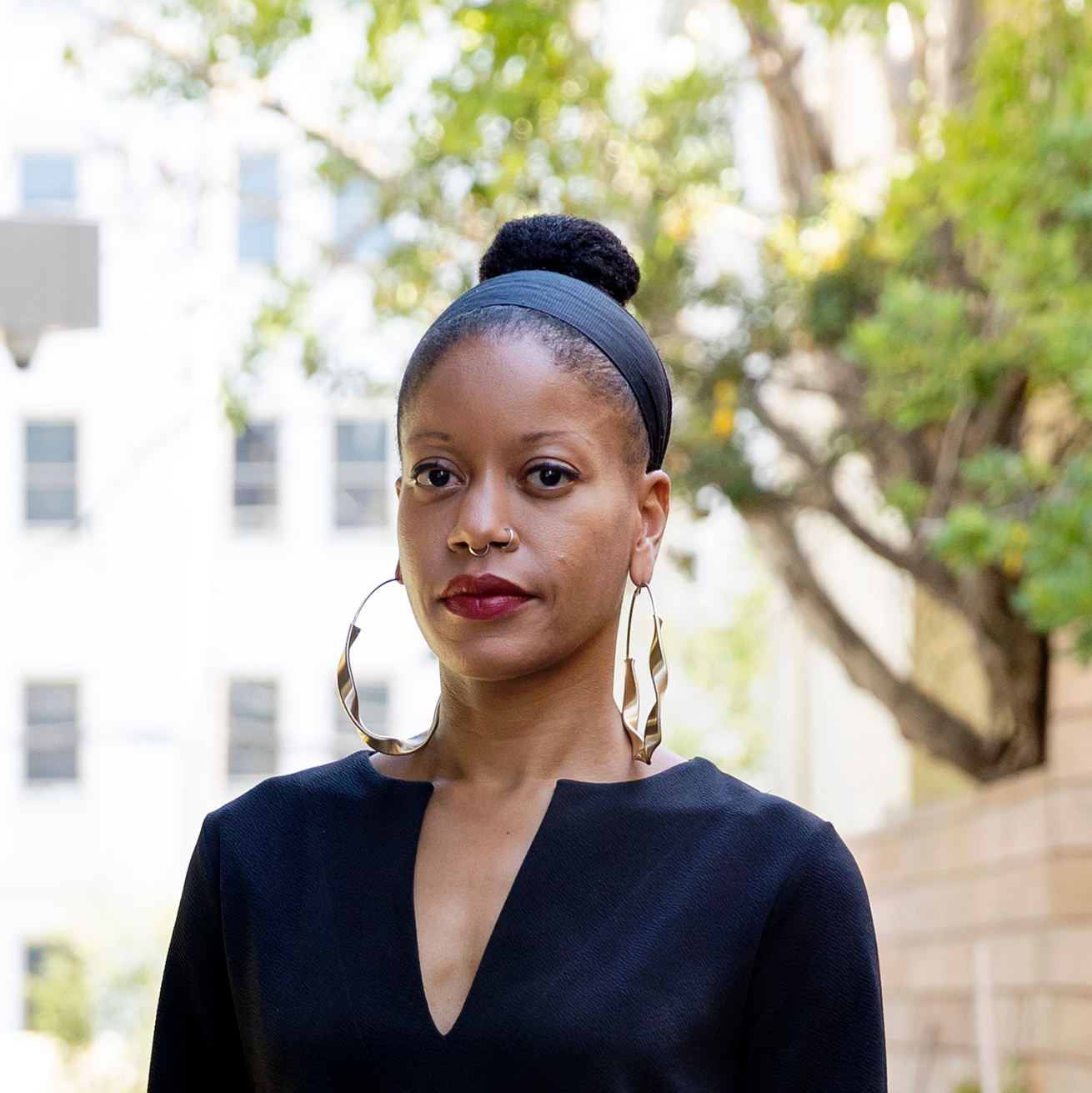
Khiara M. Bridges is a professor of law at UC Berkeley School of Law. She has written many articles concerning race, class, reproductive rights, and the intersection of the three. Her scholarship has appeared in the Harvard Law Review, Stanford Law Review, the Columbia Law Review, the California Law Review, the NYU Law Review, and the Virginia Law Review, among others. She is also the author of three books: Reproducing Race: An Ethnography of Pregnancy as a Site of Racialization (2011), The Poverty of Privacy Rights (2017), and Critical Race Theory: A Primer (2019). She is a coeditor of a reproductive justice book series that is published under the imprint of the University of California Press.
She graduated as valedictorian from Spelman College, receiving her degree in three years. She received her J.D. from Columbia Law School and her Ph.D., with distinction, from Columbia University’s Department of Anthropology. While in law school, she was a teaching assistant for the former dean, David Leebron (Torts), as well as for the late E. Allan Farnsworth (Contracts). She was a member of the Columbia Law Review and a Kent Scholar. She speaks fluent Spanish and basic Arabic, and she is a classically trained ballet dancer.
Education
B.A., summa cum laude, Spelman College
J.D., Columbia Law School
Ph.D., with distinction, Columbia University
Khiara M Bridges is not teaching any Law courses in Spring 2026.

Living in a Post-Roe America with Khiara Bridges
UC Berkeley law professor Khiara Bridges discusses what’s at stake for Black communities following the Supreme Court’s landmark ruling overturning Roe v. Wade.

The Supreme Court Is Blowing Up Law School, Too
“The court is not going to save us. It is going to let Trump do whatever he wants to do. And it’s going to help him get away with it,” said Professor Khiara M. Bridges in response to the court’s decision on Trump v. Hawaii.

A Little Bit Pregnant
Professor Khiara M. Bridges discusses the “period pill.”

Khiara M. Bridges Testifies Before the U.S. Senate Judiciary Committee
On July 12, Professor Khiara M. Bridges testified before the U.S. Senate Judiciary Committee about the fallout from the U.S. Supreme Court’s recent decision in Dobbs v. Jackson Women’s Health, which overturned the 1973 Roe v. Wade ruling. Bridges’ exchanges with several senators, particularly Missouri Republican Sen. Josh Hawley, drew extensive media coverage.

Explainer: What’s Next for Abortion Pills After the Fall of Roe
“It’s up to states, really, as to how they want to go about making abortion unacceptable,” Professor Khiara M. Bridges says, predicting the argument over whether the federal government can protect access to abortion pills, particularly mifepristone, “a long-term battle.”

Some Americans are Offering to Help Others Travel Out of State for an Abortion. But in a Post-Roe Era, Experts Urge Caution

The Supreme Court Is Keeping Trump’s Promises
“It’s so disingenuous to say that we’re just going to allow political majorities in the state to determine the legality of abortion when not everybody in the state is going to be able to vote because of what Republicans are doing and because of what the Court is allowing them to do,” Professor Khiara M. Bridges says. “Our democracy is undeserving of that label.”

The Religious Right Mobilized to End Roe. Now What?
Professor Khiara M. Bridges talks about the racial dynamics of the fight over abortion, and how they shaped the events that led to the recent overturning of Roe v. Wade.

‘We Will Fight Like Hell’: California Reacts to Supreme Court’s Decision
Professor Khiara M. Bridges says the Supreme Court’s decision to overturn Roe v. Wade presents an imperative for California to “be on the offensive” but putting additional money and effort into ensuring its residents, and those coming from the outside to receive care, can access contraceptives and abortion services. “When you have a law that makes abortion unavailable, you have a law that makes unavailable a service upon which Black people disproportionately rely, so there’s a specific racial impact,” she says, noting that Black people have not only higher rates of unintended pregnancy but also higher rates of maternal mortality and morbidity.

Professor Khiara M. Bridges: Court Abortion Ruling Is an Assault on Women — and Democracy
The U.S. Supreme Court’s decision allowing many states to end or sharply curtail abortion rights will have profoundly harmful effects on those who are forced to continue unwanted pregnancies and on democracy itself, says Berkeley Law scholar.

Garland Signals Brewing Battle With GOP-Led States Over Access to Abortion Pills
“There’s an open legal question about whether states could limit the use of mifepristone in light of the FDA’s judgment that the medicine is safe and effective. It’s not at all clear,” Professor Khiara M. Bridges says. “States can regulate the practice of medicine within their borders.”
Birth Control Restrictions Could Follow Abortion Bans, Experts Say
Professor Khiara M. Bridges says the Supreme Court’s recent decisions have sent a message to conservative state lawmakers that it won’t stand in the way of laws restricting birth control methods. “It’s all of the implications of the Dobbs decision that make us reasonable to be fearful about the accessibility of contraception in the future,” she says.

Q&A: If Abortion Is Illegal, What Happens Next?
Professor Khiara M. Bridges and NPR reporter Sarah McCammon answer listener questions about what a post Roe v. Wade world might look like.

Abortion, Climate, Guns, and Religion: Supreme Court Poised for a Sharp Right Turn
Four Berkeley Law professors, including Dean Erwin Chemerinsky, discuss the court’s anticipated conservative decisions on some of America’s most divisive issues.
Overturning Roe v. Wade could restrict more than abortion, according to experts
Professor Khiara M. Bridges says the potential overturning of Roe v. Wade could have implications for other reproductive rights such as contraception and IVF

After Leaked Roe Ruling, GOP Weighs Stricter Abortion Bans
Professor Khiara M. Bridges says in its initial filing, the plaintiffs in Dobbs were testing how far the Supreme Court would go to disregard the viability line

The Post-Roe Battleground for Abortion Pills Will Be Your Mailbox
Professor Khiara M. Bridges explains the obstacles to mail-ordered abortion medications and says she expects a conflict between a state’s ability to regulate the practice of medicine and the federal government’s ability to regulate the availability of any medication in the US.
What Would Overturning Roe Mean for Birth Control?
Professor Khiara M. Bridges warns, if the Supreme Court is willing to do away with longstanding precedent like Roe, Bridges said, it’s impossible to predict what other rights also could be in question
Biden can’t do much about abortion rights, but here’s what he could try
Professor Khiara M. Bridges explores the idea of the federal government leasing out federal lands and allow abortion clinics to operate on them
Roe established abortion rights. 20 years later, Casey paved the way for restrictions
Professor Khiara M. Bridges helps unpack the complicated question of what constitutes a burden