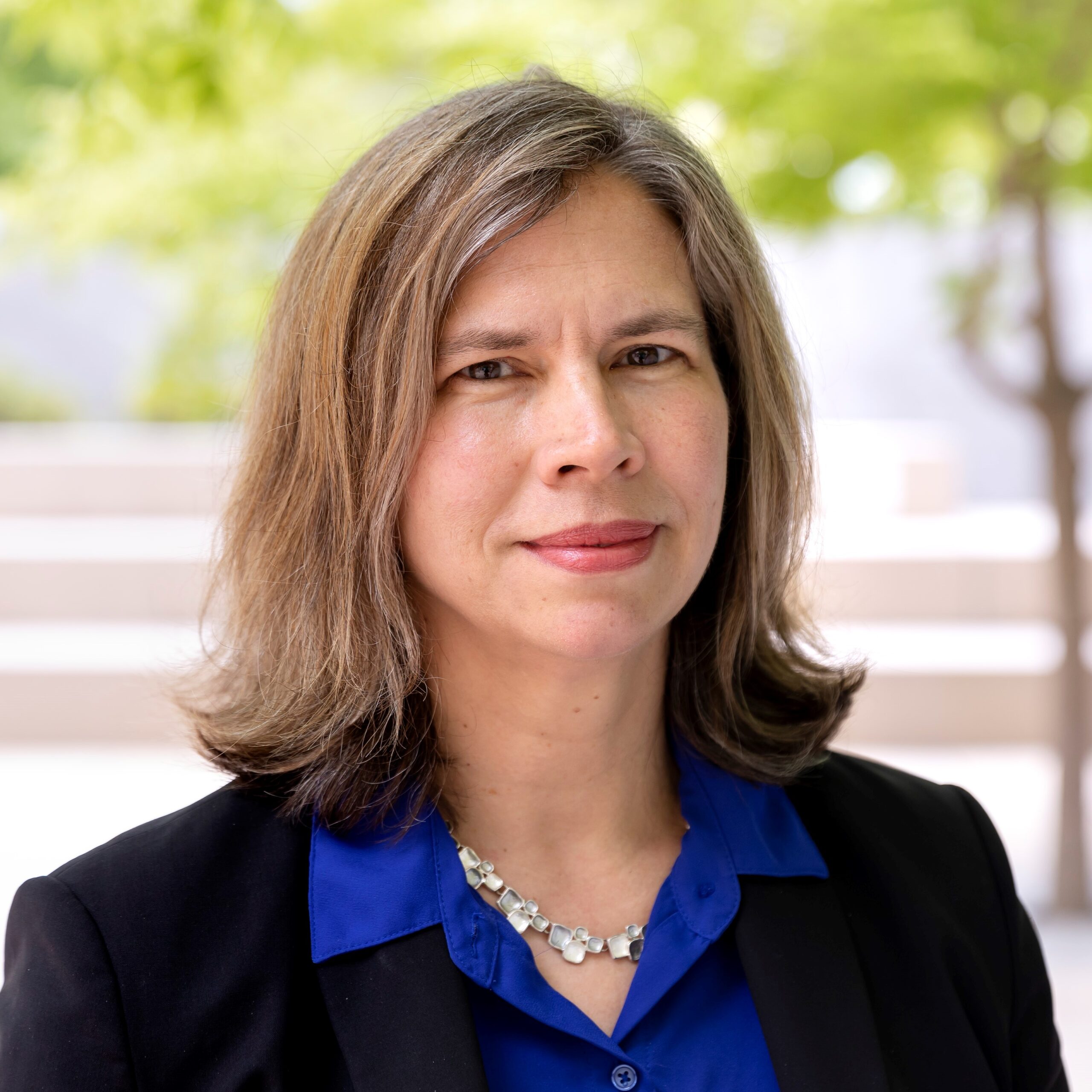
Andrea Roth joined the Berkeley Law faculty in 2011, after 3 years as a Thomas Grey Fellow at Stanford Law and 9 years as a trial and appellate attorney at the Washington, D.C. Public Defender Service. Her research focuses on how pedigreed concepts of criminal procedure and evidentiary law work in an era of science-based prosecutions. Her recent publications include “The Embarrassing Sixth Amendment” (Cal. L. Rev. 2024); “The Lost Right to Jury Trial in ‘All’ Criminal Prosecutions (Duke L.J. 2022); and “Machine Testimony,” 126 Yale L.J. 1972 (2017). She is also a co-author of a leading Evidence casebook (Sklansky & Roth) and of the chapter on forensic pattern evidence in the forthcoming new edition of the Federal Judicial Center’s Reference Manual on Scientific Evidence. From 2021-24, she served as national chair of the Legal Resource Task Group of the National Institute of Standards and Technology’s Organization of Scientific Area Committees. She is also one of several faculty co-directors of the Berkeley Center for Law and Technology and is an elected member of the American Law Institute.
In 2019 Roth was one of four recipients of the campus-wide Distinguished Teaching Award, and chaired the campus’s committee on teaching for three years. In 2017, she received the campus-wide Prytanean Faculty Award, given to one pretenure woman faculty member. In 2016, she received the law school’s Rutter Award for Teaching Excellence. She has also received teaching awards from Women of Berkeley Law and the Berkeley Criminal Law Journal.
Education
B.S./B.A., Mathematics and Political Science, University of New Mexico (1995)
J.D., Yale Law School (1998)
Andrea Roth is not teaching any Law courses in Spring 2026.
Courses During Other Semesters
| Semester | Course Num | Course Title |  Teaching Evaluations Teaching Evaluations | Fall 2025 | 230 sec. 001 | Criminal Law | View Teaching Evaluation | 241 sec. 001 | Evidence | View Teaching Evaluation | Spring 2025 | 231.1 sec. 001 | Criminal Procedure - Adjudication | View Teaching Evaluation |
|---|

Orange County Prosecutors Operate “Vast, Secretive” Genetic Surveillance Program
Professor Andrea Roth discusses Orange County’s “spit and acquit” program, about which she’s researched and written a paper

Podcast: Can We Still Confront Our Accusers?
Professor Andrea Roth appears on Legal Talk Today to discuss the 6th Amendment and virtual court

Why Are Prosecutors Keeping a Huge, Secretive DNA Database in Orange County?
Professor Andrea Roth discusses Orange County’s forensic DNA database and says it is the largest in the country never authorized by a legislature

Election Implications: Professors Describe What to Expect in Various Areas of Law
Berkeley Law experts describe what to expect — depending on who wins the presidency and which party controls the Senate — from health care and the environment to immigration and criminal justice.

Prop. 20: Should California’s DNA bank expand to shoplifters, opioid offenders?
Professor Andrea Roth discusses CA Prop 20, saying putting more money into collecting DNA is a a zero-sum game

In Special Mini Courses, Berkeley Law 1Ls Dive Deep and Build Relationships — Remotely
A special slate of one-credit classes is helping first-year students and professors get to know one another during an unprecedented semester.

Scattered But Not Distant
While COVID-19 brought in-person events to a screeching halt, Berkeley Law’s intellectual life has continued at full speed through a steady stream of timely online offerings. Other than brief pauses

Virtual Vigor: Keeping Berkeley Law’s Intellectual Life Vibrant from a Distance
While students, faculty, and staff are scattered around the world, Berkeley Law has brought them together through a variety of online events—many focused on the pandemic and the implications of the death of George Floyd.

Pushing Toward Forensic Fairness
Research by professors Rebecca Wexler and Andrea Roth sparks a federal bill to help level the forensic evidence playing field.

Trial by video conference? Not yet, but coronavirus forces Bay Area courts to embrace more virtual proceedings
Professor Andrea Roth explores the idea of “virtual court” testimony by video and the right to confront.

Berkeley Law Duo Sparks Proposed Bill for More Forensic Algorithm Access
Scholars Rebecca Wexler and Andrea Roth prompt a California congressman to introduce a federal bill that would make the algorithms more transparent to criminal defendants.

Professor Andrea Roth Probes Unique Orange County Database of DNA Profiles
Her new California Law Review article examines why defendants accused of misdemeanors are offered leniency in exchange for their DNA.

Berkeley Judicial Institute Eyes Federal Judicial Reform in First Symposium
An exceptional roster of judges, practitioners, and scholars gathered to develop solutions for the growing burden on federal courts.

Judge Week Gives Students Valuable Insights on Clerkships and Beyond
Judges confer with students in one-on-one meetings, classroom visits, and panel discussions.
Courtroom Experience Makes Law Prof an Expert Instructor
Assistant Professor Andrea Roth, who specializes in how technology and artificial intelligence will change the law, says she never forgets her experience in court.

Berkeley Law Launches New Era under Dean Erwin Chemerinsky
Highlights include new faculty, flourishing programs, high-impact research, and expanding student opportunities.

The Trouble with DUI Marijuana
Berkeley Law Professor Andrea Roth says California should resist the temptation to follow other states and create a “per se” DUI marijuana law.

State Propositions Tackle Criminal Justice System
A slew of ballot propositions are on the state ballot, from repeal of the death penalty to legalization of recreational marijuana.

Faculty Help Mexican Law Students and Professors Shift to New Justice System
When approached about training top Mexican law students and professors to help implement the nation’s new criminal justice system, Berkeley Law faculty members jumped at the chance.
Andrea Roth Wins Berkeley Law’s Rutter Award for Teaching Distinction
Students hail her dedication and interest in them both as people and budding lawyers.